

Certification 2024: Master The SEO Stackable Framework: Technical Foundations: Start here...
-
Digital Marketer's Toolbox: Basic Training Workshop
Technical Foundation: Stage 1 - Understanding The Frameworks... -
- Creating a Digital Marketing Blueprint
-
- Selling a Digital Marketing Blueprint to Businesses
-
- Local SEO Framework
-
- National SEO Framework
-
- Persuasive Copywriting Strategies Framework
-
- Affiliate Marketing Framework

Technical Foundation: Stage 1 – Understanding The Frameworks…


Setting expectations: As we all know, digital marketing is a massive topic that comprises many skills. You are here because you want to fast-track your learning curve without wasting your time. We have mapped out the “Big Idea” to best serve the community. It’s common to see too much material and feel overwhelmed – don’t; think of seeing the “Big Idea” as you being an eagle flying high above all the mountains. You know and see what is going on around you. This mind-shift frees you from overwhelm ->> into one of the greatest adventures of your life. The choice is yours…
In this Power 1-hour training workshop, you will see Digital Marketers Toolbox in action, reverse engineering a niche that is currently exploding. Within this hour, you will see how Digital Marketers Toolbox builds your digital marketing blueprint framework, giving you all the starting blocks you need as a business to market your business.
Digital Marketers Toolbox gives you the edge… While others mess around with spreadsheets and prompts and A.I. chat-bots -> you are building your business swallowing keyword by keyword, cluster by cluster, campaign by campaign by taking the correct actions that connect with the right audience.
- The timestamps of the video will be added to the chapters to help you quickly find parts you are interested in.
- Each chapter runs in the progression of what actions to consider as you do different digital marketing tasks as you build your campaign.
- You can start by targeting one keyword or swallow your market whole.
- The choice is totally up to you. Charge on and know that nothing is impossible when you have a vision and a goal of what you want to achieve.
If you have the mindset “it’s complicated,” you have already lost because, at Network Empire, we keep our edge and eat “it’s complicated” for breakfast! We adapt as the web changes. Nothing can hold us back once, regardless of what obstacles come our way.
The team at Network Empire encourages you not to overthink but rather think on how you going to break into the market you after. It does not matter if its one keyword or a thousand.
In this workshop, you have the processes laid out to reference as you go. Focus on one step at a time and enjoy discovering what golden nuggets Digital Marketers Toolbox has mined for you to build your business.
Enjoy!
Network Empire Team.
P.S Just remember ‘Digital Marketers Toolbox’ is your ‘digital marketing blueprint framework’ you use every day as you swallow your market whole using the methods and strategies you learn.
It does not matter if you target 1 keyword, selling blueprints, do local marketing, OR swallowing your markets whole for your business… ‘Digital Marketers Toolbox’ is the backbone that keeps giving You that edge in the game of business your competitors don’t have.
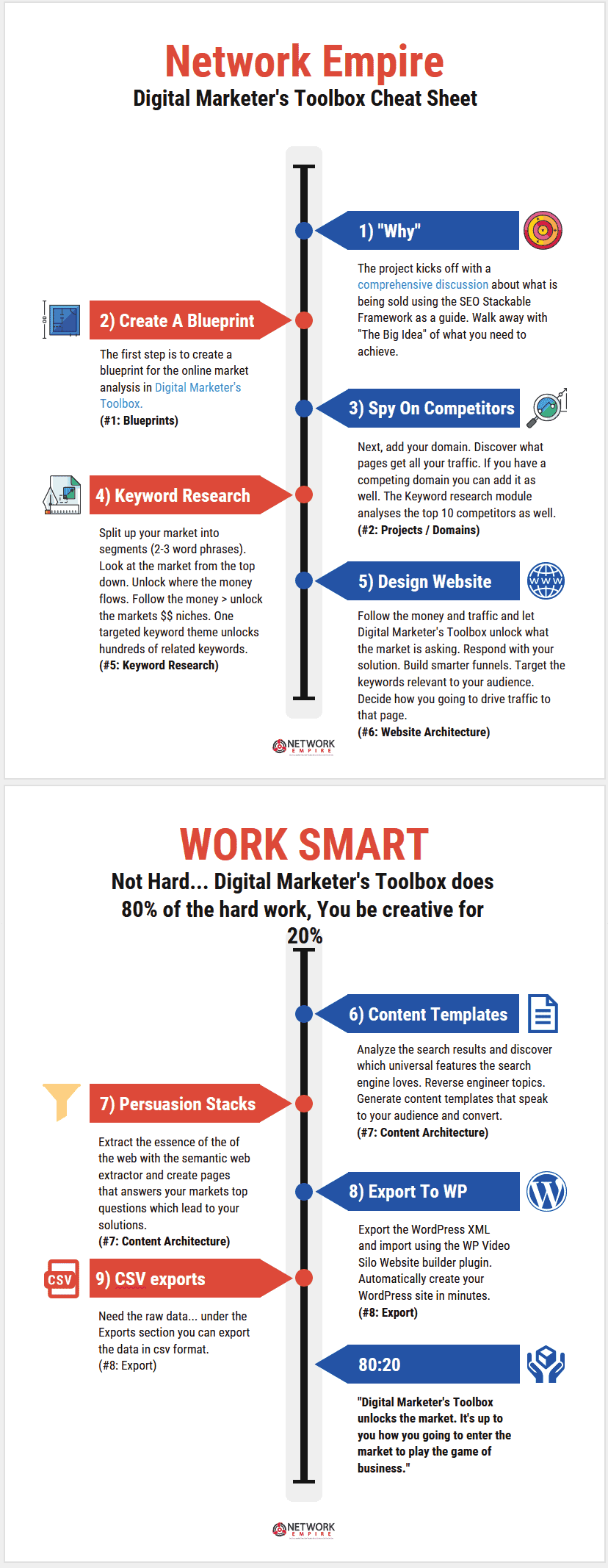
The Power 1-Hour you will now watch will show you how Digital Marketers Toolbox reverse engineers any market in minutes. Exposing how the money and traffic flows through that market. Follow the money -> find the traffic, then discover “Who you should be speaking to that wants your product or service.”
Let Digital Marketers Toolbox do the hard work for you building your digital marketing blueprint framework. You do the fun work smashing markets and niches…
Video Time Stamps:
- (V: 0:00 – 6:00) Chapter 1: The Anatomy of a Digital Marketing Blueprint
- (V: 6:00 – 17:00) Chapter 2: Setting Your Foundation
- (V: 17:00 – 19:00) Chapter 3: Audience Analysis and Persona Development
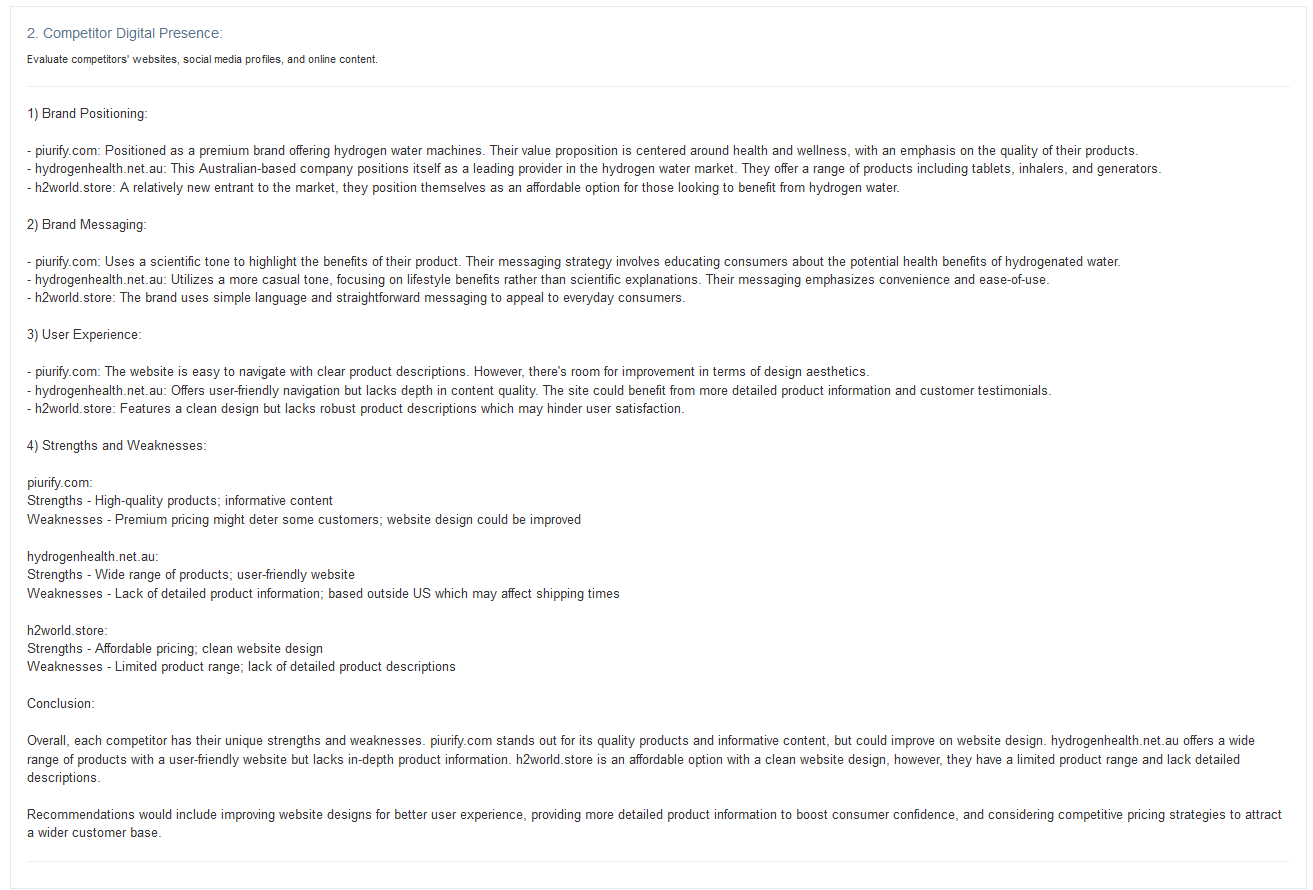
- (V: 19:00 – 23:00) Chapter 4: Competitor Bench-marking
- (V: 23:00 – 30:00) Chapter 5: Channel Selection and Tactics
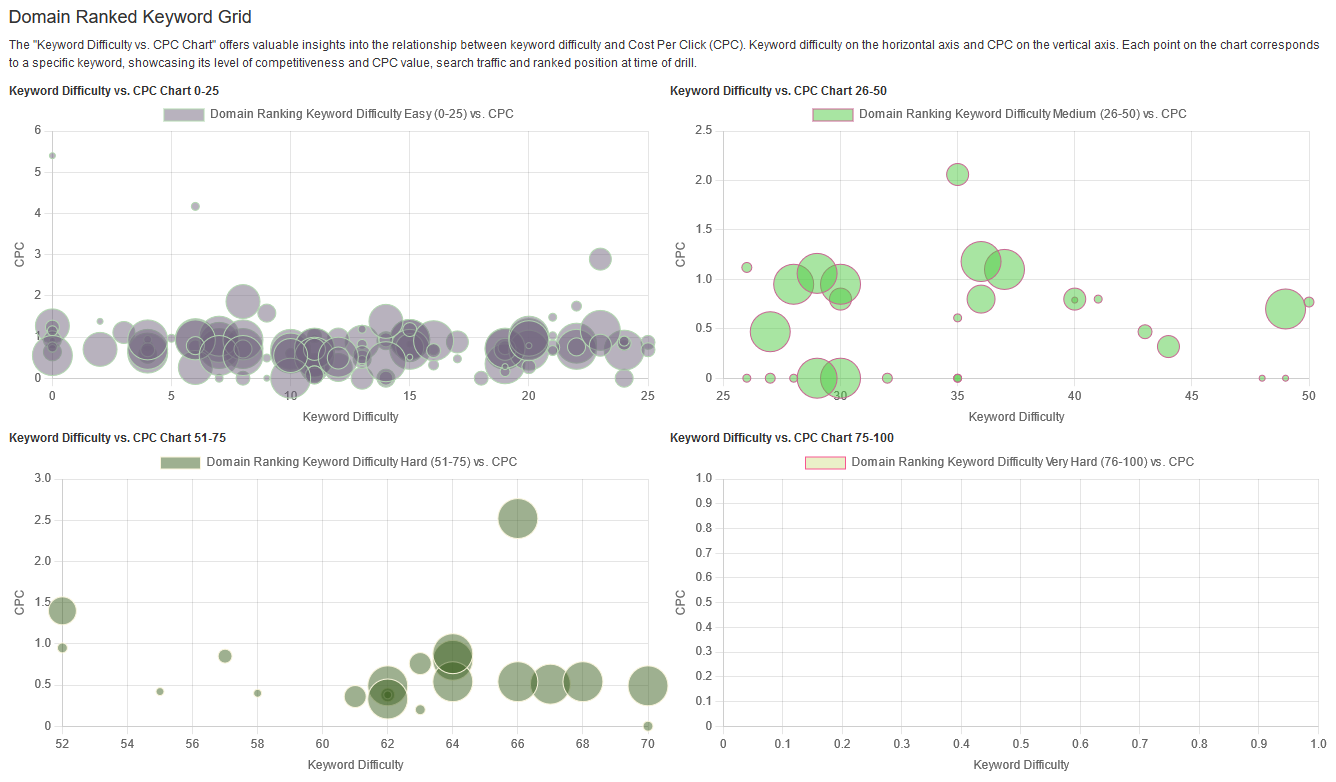
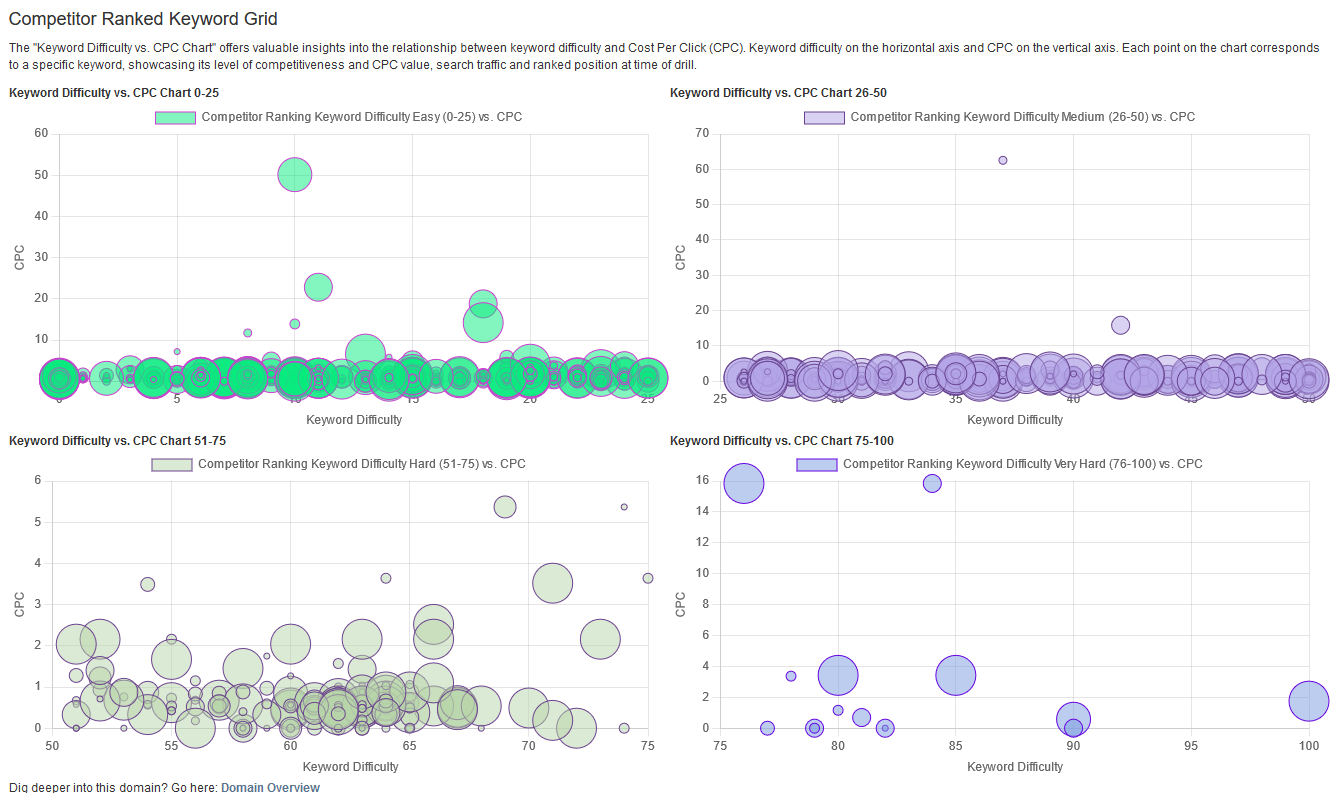
- (V: 30:00 – 35:00) Chapter 6: Keyword Research and Strategy
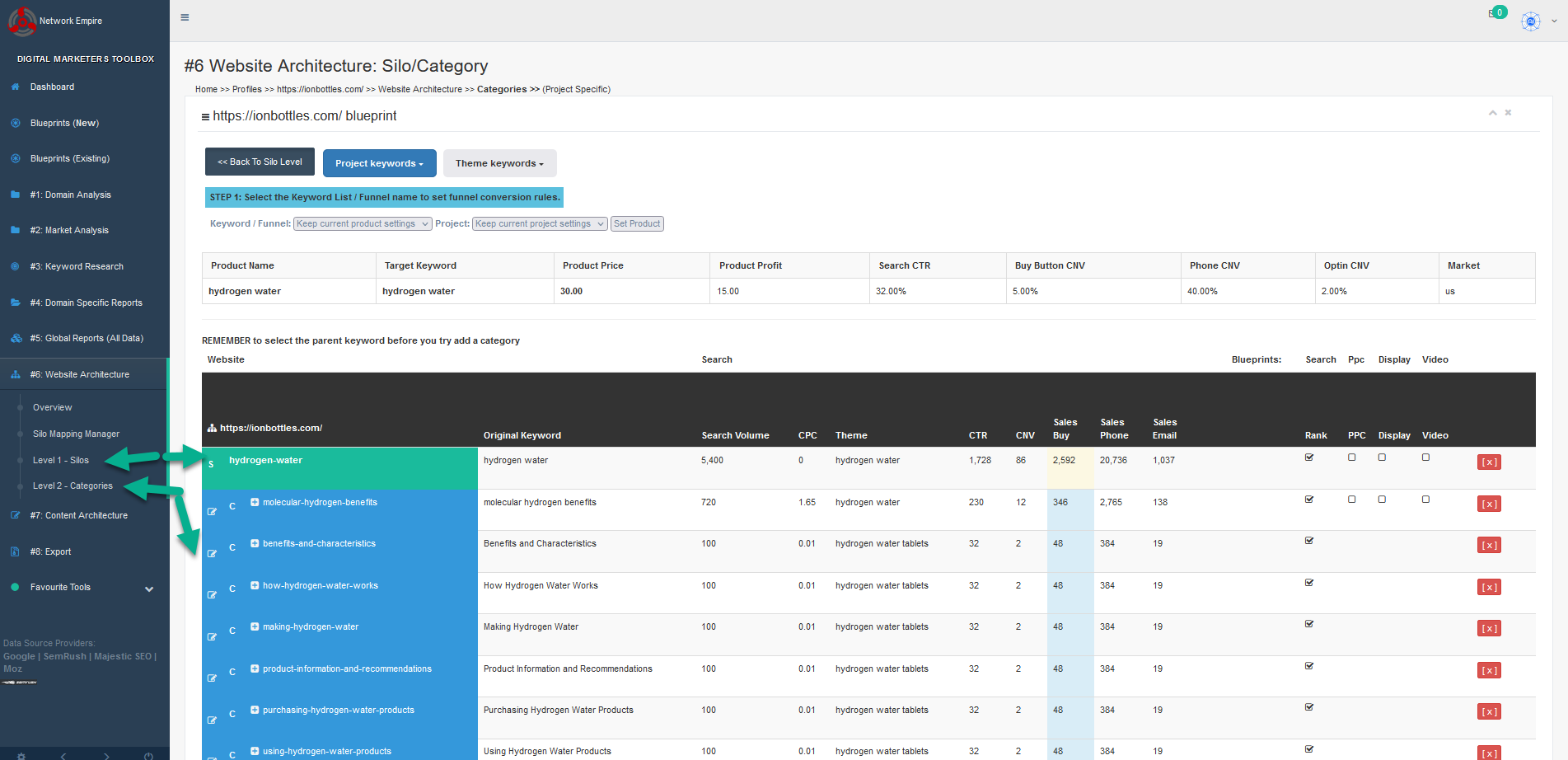
- (V: 35:00 – 38:00) Chapter 7: Fundamentals of Website Silo Structure Design and Development
- (V: 38:00 – End of Video) Chapter 8: Content Strategy Framework
Table of Contents
Summary Of What You Will Achieve.
Before you start, take a moment to reflect on the following statement in the image below. The frame of thought underpins what Digital Marketers Toolbox helps you achieve.
Take this thought and keep it back in your mind as you go through all the training sessions.
This fundamental concept infers that search engines are bound to language, and AI’s goal is to understand the language better to present you with the best relevant search results. So, without delaying you any more, let’s begin this journey!

Throughout this training program, you will journey from the foundational principles of digital marketing to the intricate blueprint implementation and management processes. You began by establishing a solid understanding of digital marketing, setting SMART goals, and developing a digital marketing blueprint using the Digital Marketers Toolbox.
Good job Digital Marketers Toolbox does all this hard work for you. Knowledge is Power!
You delved into audience analysis, persona development, competitor bench-marking, and channel selection before moving on to the tactical aspects of keyword strategy, content creation, SEO, PPC, and social media marketing.
To enrich the training, you will see in the workshop video, you get the practical application of using the Digital Marketers Toolbox on a real-world niche: “Hydrogen Water”.
In classic Network Empire Power 1 Hour workshop style, you will look over the shoulder and see how the Digital Marketers Toolbox builds your digital marketing blueprint framework for you in less than 15 minutes. The trainer walks you through what is outlined in this training.
Enjoy the journey where you shortcut your learning time and tap into SEO knowledge that has worked consistently for the last 20 years.
You will quickly realize what power lies inside. These workshops will give you the foundational concepts of what Digital Marketers Toolbox does. You will run through the entire process on this page from a top-level overview.
Digital Marketer’s Toolbox is a powerful data mining & productivity platform – time is your money...
Welcome to the World of Digital Marketing
Embark on a journey to master the dynamic and ever-evolving landscape of digital marketing. This introduction serves as your gateway into a realm where creativity meets analytics and where strategic online engagements can transform businesses.
Importance and Role of Digital Marketing in Today’s World
Digital marketing is pivotal in today’s digitally connected world, offering unparalleled reach, precision, and interactivity. It enables businesses to connect with their audience in real time, offering solutions and engaging experiences tailored to their needs.
Digital Marketing vs. Traditional Marketing
While traditional marketing relies on mediums like print and broadcast, digital marketing leverages online platforms, offering targeted visibility, measurable results, and cost-effective strategies. The shift towards digital is driven by consumers’ increasing reliance on the Internet for information, shopping, and entertainment.
The Importance of a Solid Digital Marketing Blueprint Framework
A well-structured digital marketing blueprint is essential for navigating the complex online landscape. It acts as a strategic roadmap, your go-to guide, guiding businesses through the intricacies of online channels, ensuring that every digital touch point aligns with overarching business goals. The digital marketing blueprint framework saves you hundreds of hours and gives you unique insights into any market in minutes that your competitors won’t consider.
What to Expect from This Volume
This volume is designed to build your foundation in digital marketing, from understanding the basics to developing a comprehensive digital marketing plan. Expect to learn through actionable insights, practical tools, and real-world applications, all aimed at equipping you with the skills to thrive in digital marketing. You will see next how Digital Marketers Toolbox builds your Digital Marketing Blueprint Framework for you in less than 30 minutes on autopilot. You set the target, and Digital Marketers Toolbox reverse engineers your market.
Theory: Building Your Digital Marketing Plan
Setting SMART Goals
Begin by establishing Specific, Measurable, Achievable, Relevant, and Time-bound (SMART) goals. These goals will be benchmarks for your digital marketing success, guiding your strategies and measuring progress. Let’s assume you are building a new website for a business.
Starting a new project in the Digital Marketers Toolbox requires careful planning and strategic goal-setting to ensure success in your online marketing efforts. This means that to generate a quality blueprint, you must know upfront from a top level what you want to sell.
Now, must you have a perfect plan? No, just a clear idea of what you want to achieve.
To help you, we have mapped out the top 10 SMART goals you can use at the different stages of your marketing campaign. As you will see in the examples below, when you take bite-size chunks and execute tasks meaningfully, you achieve results that have a meaningful impact on your business.
Establishing SMART (Specific, Measurable, Achievable, Relevant, and Time-bound) goals is essential in guiding your strategies and measuring progress. Here’s a bullet list of examples related to starting a new project, covering key aspects like product selection, choosing keywords, and more, in the order of best practices for launching a new marketing campaign for a new business and website:
- 1. Product Selection:
- Specific: Identify a product or service that meets a specific need within your target market.
- Measurable: Set a goal for the number of products you aim to sell or the number of inquiries you wish to receive.
- Achievable: Ensure the product can be sourced or created within your capabilities and budget.
- Relevant: The product should align with your brand and be of interest to your target audience.
- Time-bound: Set a launch date and product development and testing milestones.
- 2. Keyword Research:
- Specific: Choose keywords that are closely related to your product or service and are commonly used by your target audience.
- Measurable: Aim for a specific rank on search engine results pages (SERPs) for your chosen keywords.
- Achievable: Select a mix of high-volume and niche keywords for which you can realistically compete.
- Relevant: Keywords should reflect the search intent of your potential customers.
- Time-bound: Set deadlines for achieving desired rankings and review keyword performance regularly.
- 3. Website Development:
- Specific: Create a user-friendly website that communicates your brand and product offerings effectively.
- Measurable: Set goals for website traffic, bounce, and conversion rates.
- Achievable: Ensure you have the resources and expertise to develop and maintain a professional website.
- Relevant: The website should cater to the needs and preferences of your target audience.
- Time-bound: Establish a timeline for website launch and subsequent updates.
- 4. Content Creation:
- Specific: Develop a content strategy that includes blogs, videos, and social media posts relevant to your audience.
- Measurable: Aim for a certain number of posts per week or month and track engagement metrics.
- Achievable: Allocate resources for consistent and quality content creation.
- Relevant: Content should provide value to your audience and relate to your product or service.
- Time-bound: Create a content calendar with specific content production and publication deadlines.
- 5. SEO Optimization:
- Specific: Implement SEO best practices to improve your website’s visibility on search engines.
- Measurable: Aim for specific improvements in search rankings and organic traffic.
- Achievable: Focus on achievable SEO tactics that match your skill level and resources.
- Relevant: SEO efforts should be aligned with your overall marketing goals and target audience.
- Time-bound: Set milestones for achieving SEO improvements and conduct regular audits.
- 6. Social Media Marketing:
- Specific: Establish a presence on social media platforms where your target audience is most active.
- Measurable: Set goals for follower count, engagement rate, and conversion rate from social media.
- Achievable: Choose a manageable number of platforms to maintain a consistent presence.
- Relevant: Social media content and interactions should reflect your brand and appeal to your target audience.
- Time-bound: Plan social media campaigns and measure their performance over specific periods.
- 7. Email Marketing:Specific: Develop an email marketing strategy to nurture leads and communicate with existing customers.
- Measurable: Aim for specific metrics like open rate, click-through rate, and conversion rate.
- Achievable: Use email marketing tools that fit your budget and expertise.
- Relevant: Emails should provide value and be relevant to the interests of your subscriber list.
- Time-bound: Schedule regular email campaigns and measure their performance.
- 8. Paid Advertising:
- Specific: Launch targeted advertising campaigns on platforms like Google Ads or social media.
- Measurable: Set a budget and target specific ROI, click-through, and conversion rates.
- Achievable: Start with a modest budget and scale up based on performance.
- Relevant: Ads should be highly relevant to your target audience and linked to well-optimized landing pages.
- Time-bound: Run campaigns for set periods and analyze performance to guide future efforts.
- 9. Analytics and Measurement:
- Specific: Implement tools to track and analyze website traffic, conversion rates, and other key metrics.
- Measurable: Set specific goals for improvement in these metrics.
- Achievable: Ensure you have the knowledge or support to use analytics tools effectively.
- Relevant: Focus on metrics that directly inform your marketing strategies and business goals.
- Time-bound: Review analytics regularly to track progress and adapt strategies as needed.
- 10. Customer Feedback and Adaptation:
- Specific: Gather customer feedback through surveys, reviews, and direct communication.
- Measurable: Aim for a specific number of feedback instances and a positive satisfaction score.
- Achievable: Implement manageable methods for collecting and analyzing feedback.
- Relevant: Feedback should improve your product, service, and customer experience.
- Time-bound: Set regular intervals for collecting feedback and implementing changes based on insights.
By following these SMART goals, you can establish a clear roadmap for your digital marketing campaign at each stage, ensuring that each step is purposeful, trackable, and aligned with your overall business objectives. Must you do it all now? No, start with what keywords you want to target.
Developing a Digital Marketing Blueprint
The Digital Marketing Blueprint is your roadmap, outlining the strategic approach to achieving your digital marketing objectives. It encompasses market analysis, audience targeting, channel selection, content strategy, and key performance indicators (KPIs). Think of the Digital Marketing Blueprint Framework as your cheat sheet to any market or niche that you keep coming back to as you deploy your marketing to swallow your market whole keyword cluster by keyword cluster.
Execution, Measurement, and Adjustment
With your blueprint in hand, execute your digital marketing campaigns with precision. Utilize Digital Marketers Toolbox for data-driven insights and automation, ensuring each campaign is optimized for performance. Regularly measure outcomes against your SMART goals, and be prepared to adjust strategies for continuous improvement.
Instead of spending hours trying to figure out prompts for your AI to use. Simply copy paste and from your Digital Marketing Blueprint and tell AI what you want done.
Educate:
A Digital Marketing Blueprint is the strategic foundation of your digital marketing efforts, encompassing all the critical components necessary for online success. It includes your business goals, target audience, marketing channels, content strategy, and measurement metrics. Understanding these elements ensures a cohesive and effective digital marketing strategy.
Actionable Steps to Follow in the Digital Marketers Toolbox:
- Blueprint Creation: Start by defining your business objectives and target audience within Digital Marketers Toolbox. Use the platform’s tools to outline your marketing strategy, incorporating keywords, content themes, and competitive analysis.
- Market Analysis: Leverage the Toolbox’s Vertical Online Market Analysis (VOMA) feature to gain insights into your industry, audience behavior, and competitive landscape.
- Channel Planning: Utilize the Toolbox to identify the most effective digital marketing channels for reaching your audience based on the data and insights gathered.
Real-World Actionable Steps:
- Goal Setting: Define clear, measurable goals for your digital marketing efforts (e.g., increase website traffic by 20% within six months).
- Audience Research: Conduct surveys and interviews and use analytics tools to deeply understand your target audience’s needs and preferences.
- Competitive Analysis: Manually review top competitors’ websites and marketing strategies to identify opportunities for differentiation.
- Content Planning: Develop a content calendar outlining topics, formats, and publishing schedules based on audience interests and SEO research.
- Channel Strategy: Choose your primary digital marketing channels (e.g., SEO, social media, email) and outline specific tactics for each.
Practical: Let Brand Architect (GTP) Build Your Digital Marketing Plan Brand Template Before You Start Your Blueprint.
(V1: 0:00 – 9:34) Introduction to Network Empires Digital Marketers Toolbox: Brand Architect (GTP)
So why a GTP? Well 1) it was fun to test the new technology and 2) the Brand Architect helps the folk who are battling to get started. In this short video you will see how you can check out a market of a niche before you start your digital marketing blueprint. Fine-tune your ideas before you start.
GET GTP:>> Digital Marketers Toolbox: Brand Architect
"I'm working on [National,local, eCommerce, affiliate] marketing
for my brand called [Brand Name]. The target keyword is [target
keyword], and the [related keywords: keyword 1, related keyword 2, related keyword 3] are what is being targeted.
We specialize in [product or service description] in this [location]."
IMPORTANT NOTE: The purpose of the Brand Architect output from the GTP is to give you a top level snapshot of the market. Please pay attention to your keyword selection. This snapshot will help you refine your ideas before you use Digital Marketers Toolbox.
Warning: Browser extension plugins like WebGPT plugin can cause the response from the Brand Architect to be weird. Disable the plugin if you experience issues or weird responses from the AI.
Rule #1: Quality in -> Quality out… Secret ingredients to help you build your brand and business.
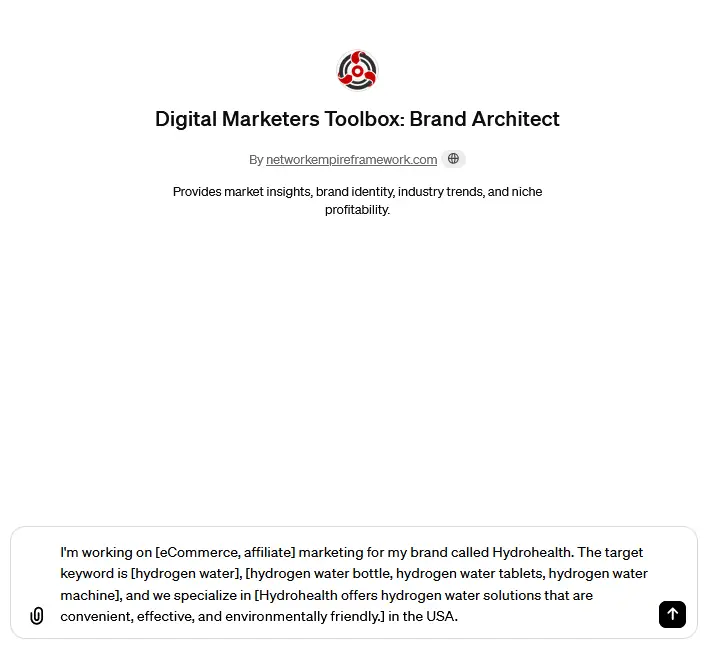
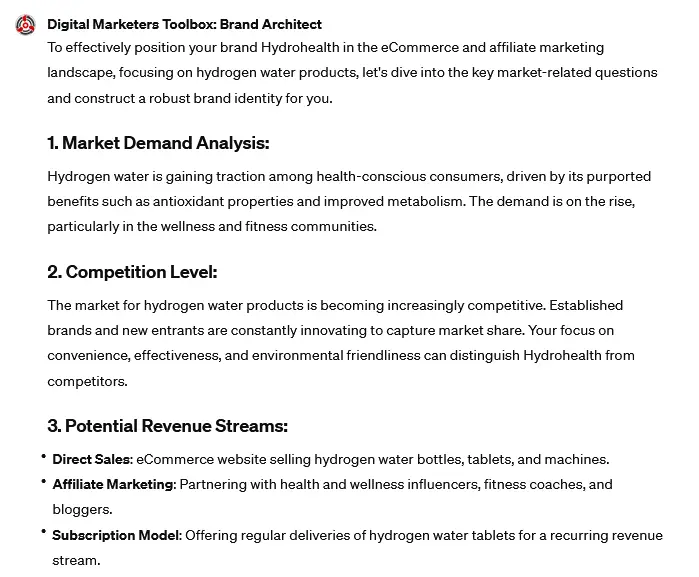
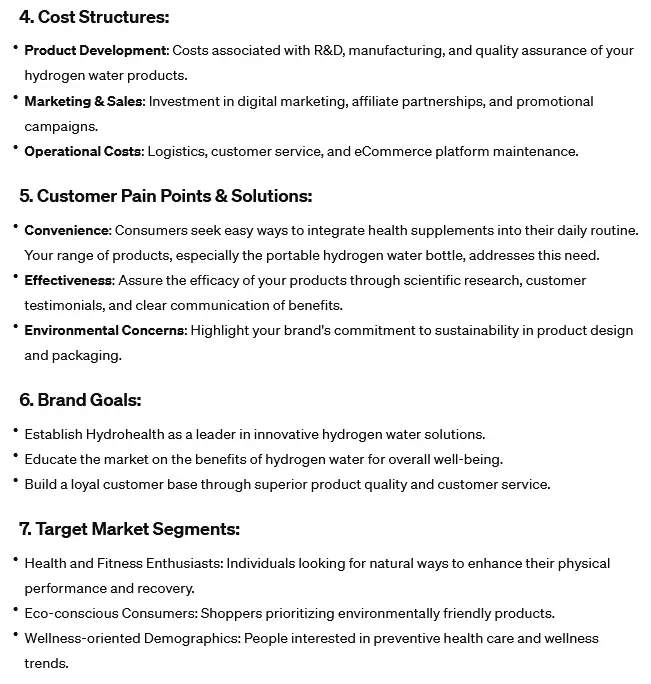
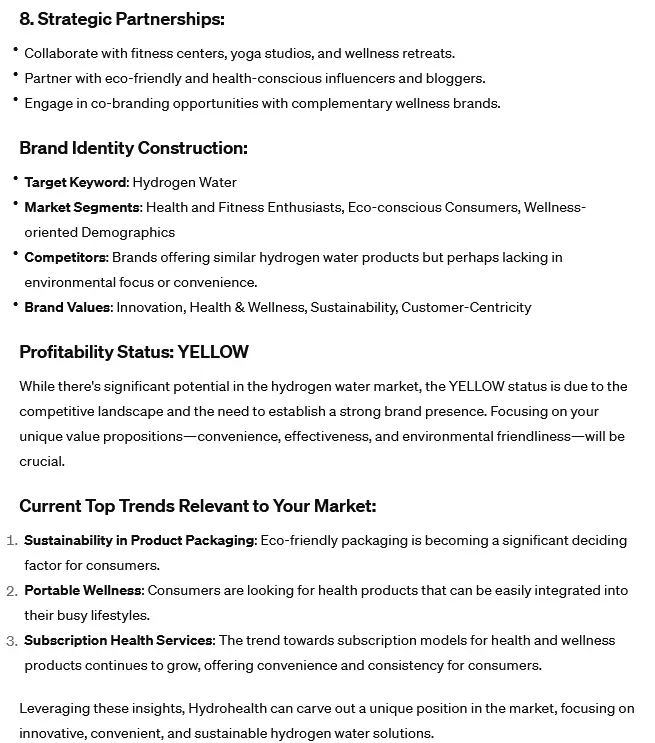
Now that you have collected some information from the market you can create your own Brand Template in preparation to use Digital Marketers Toolbox.
PRACTICAL TIP: Create a swipe file that you copy paste from where you have your brand details, the keywords you after, the keyword clusters you interested in and use the swipe file while you do your initial research.
The Digital Marketers Toolbox: Brand Architect returned actionable insights about the target market your interested in. You know more about the target keyword now then you did 10 minutes ago. I bet ideas are forming already.
					Brand Template:

Primary Target Keyword:
- Market Segments:

Known Top SERP Competitors x 2:
- Market Leader Competitors x 2:
- Directly Related Competitors x2:

Brand Name:
Brand URL (Money Site):
- Brand Values:
- Business Objective/Goal:
- Unique Selling Proposition (USP):
- Testimonials or Reviews:
- Product/Service Name:
- Pricing and Availability:
- Purpose/Function:
- Key Features:
- Benefits:
- Target Audience:
- Use Cases:
- Tone:
- Tone and Influencer style:
(V: 0:00 - 6:00) Chapter 1: The Anatomy of a Digital Marketing Blueprint
Previous Chapter Recap:
In the introduction, we navigated through the essence of digital marketing, emphasizing its importance in the modern business landscape. We contrasted digital and traditional marketing, highlighted the significance of a digital marketing blueprint, and set the stage for what to expect from this training program.
Educate:
A Digital Marketing Blueprint is the strategic foundation of your digital marketing efforts, encompassing all the critical components necessary for online success. It includes your business goals, target audience, marketing channels, content strategy, and measurement metrics. Understanding these elements ensures a cohesive and effective digital marketing strategy. Digital Marketers Toolbox Builds the framework for you.
Actionable Steps to Follow in the Digital Marketers Toolbox:
- Blueprint Creation: Start by defining your business objectives and target audience within Digital Marketers Toolbox. Use the platform’s tools to outline your marketing strategy, incorporating keywords, content themes, and competitive analysis.
- Market Analysis: Leverage the Toolbox’s Vertical Online Market Analysis (VOMA) feature to gain insights into your industry, audience behavior, and competitive landscape.
- Channel Planning: Utilize the Toolbox to identify the most effective digital marketing channels for reaching your audience based on the data and insights gathered.
Real-World Actionable Steps:
- Goal Setting: Define clear, measurable goals for your digital marketing efforts (e.g., increase website traffic by 20% within six months).
- Audience Research: Conduct surveys and interviews and use analytics tools to deeply understand your target audience’s needs and preferences.
- Competitive Analysis: Manually review top competitors’ websites and marketing strategies to identify opportunities for differentiation.
- Content Planning: Develop a content calendar outlining topics, formats, and publishing schedules based on audience interests and SEO research.
- Channel Strategy: Choose your primary digital marketing channels (e.g., SEO, social media, email) and outline specific tactics for each.
(V: 6:00 – 17:00) Chapter 2: Setting Your Foundation
Previous Chapter Recap:
Chapter 1 introduced the anatomy of a Digital Marketing Blueprint, emphasizing the importance of understanding its components to shape your digital strategy effectively. We explored the overview of digital marketing channels and the significance of identifying online audiences and buyer personas.
Educate:
Setting your foundation in digital marketing involves:
- Clearly defining your business goals and objectives
- Establishing a robust brand identity
- Articulating your value proposition
These elements are crucial as they guide your marketing strategies and communications, ensuring they resonate with your target audience.
Actionable Steps to Follow in the Digital Marketers Toolbox:
- Goal Definition: Use the New Blueprint to create a digital marketing blueprint framework that is specific, with measurable objectives aligned with your business aspirations.
- Brand Identity: Employ the platform’s branding tools to crystallize your brand’s visual and communicative elements, ensuring consistency across all digital touch points.
- Value Proposition: Leverage the Toolbox’s competitive analysis features to carve out a unique value proposition that sets you apart in the marketplace.
Real-World Actionable Steps:
Tip: It does not matter if your ‘one man gang’, sole entrepreneur, part of an agency. Extract the relevance of the tasks. If no team, have a meeting with yourself
- Business Objectives: Conduct a workshop to articulate clear business goals, considering long-term vision and short-term objectives. ([VOMA], [Market Landscape] tabs)
- Brand Guidelines: Develop comprehensive brand guidelines, including logo usage, colour palette, typography, and tone of voice, to ensure brand consistency. ([Brand] tab)
- Market Analysis: Perform a SWOT analysis to understand strengths, weaknesses, opportunities, and threats about competitors and market trends. ([Market Landscape], [Competitor Landscape] tabs)
- Value Proposition Workshop: Organize a session to define your unique selling points (USPs) based on customer needs, market gaps, and business strengths. ([VOMA], [Brand], [Keyword Clusters (Agency)], [Intent & Audience Interests (Agency)] tabs)
Isn’t it great how all the key components needed for your analysis are all nicely stacked and ready for you!
This video is the starting point of the process. Now that you have created your brand template (found on dashboard), and have an idea of what the pitfalls and opportunities are for the project you can fire up Digital Marketers Toolbox and then can proceed to create a New Blueprint.
You will see how your digital marketing blueprint gets created for you in less than 20 minutes. The entire framework done for you to fine-tune. It does not matter if you targeting 1 keyword or wanting to swallow your market whole. Digital Marketers Toolbox does the heavy lifting, freeing up your brain power to focus on what is important – Winning in the game of online business.
Digital Marketers Toolbox does all the hard work for you in 15 minutes. No more time wasted with you having to use 10 tools to get data, then you having to filter through all the data, then having to write about what you have discovered.
There is an easier way – All the intel you need is all ready for you and your team to get started. No more time wasted having to go collate all this information from multiple sources. How long would it take you? Just saying…
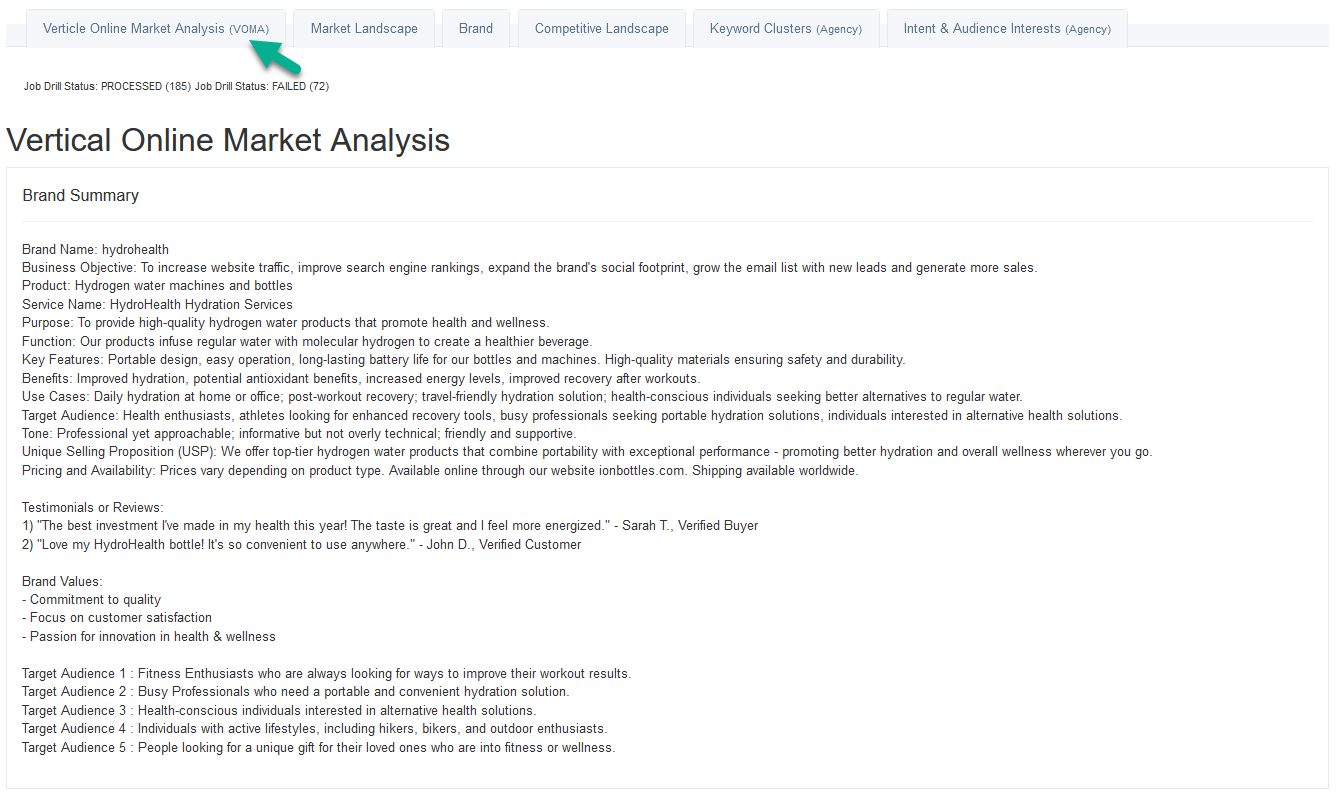
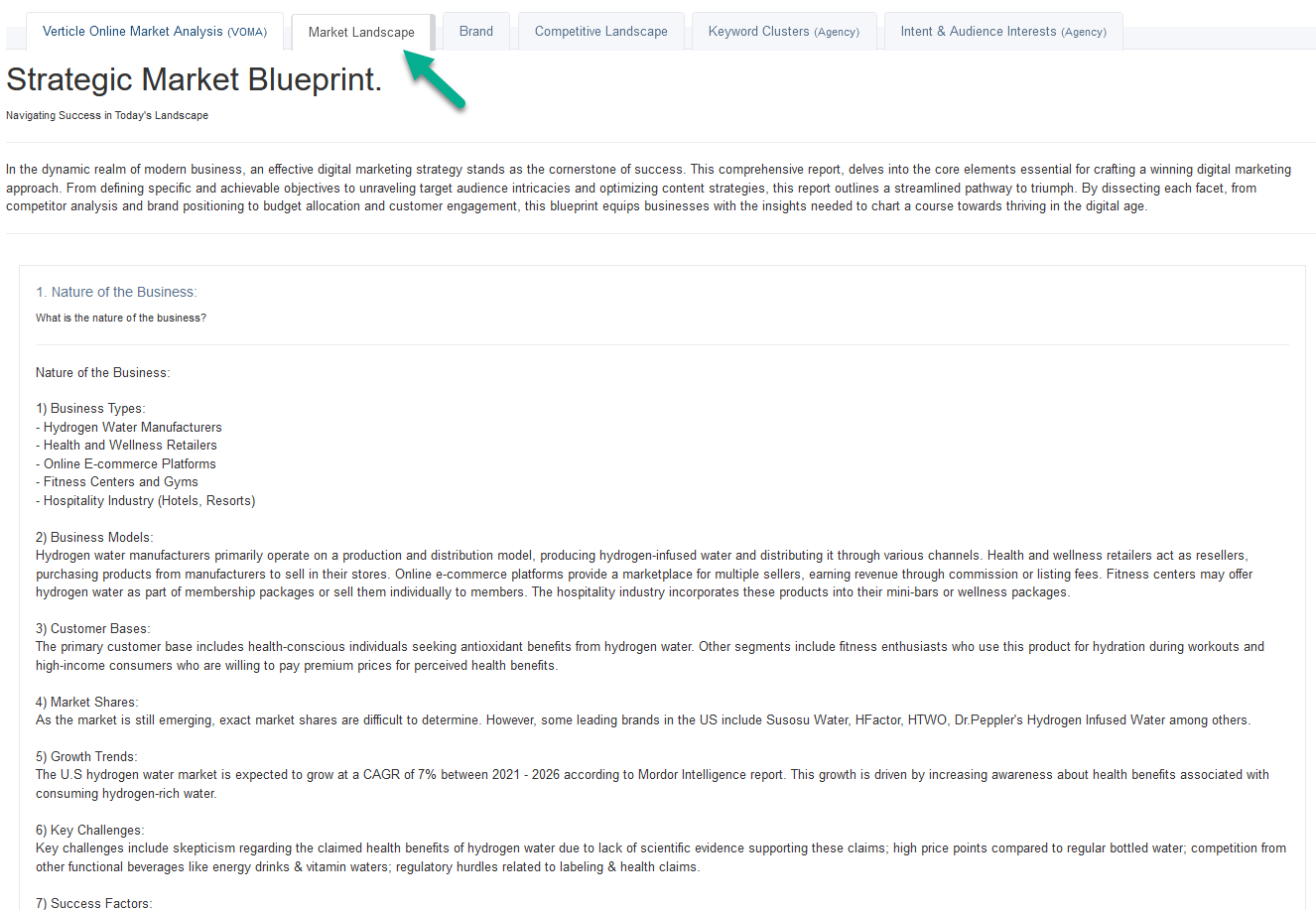

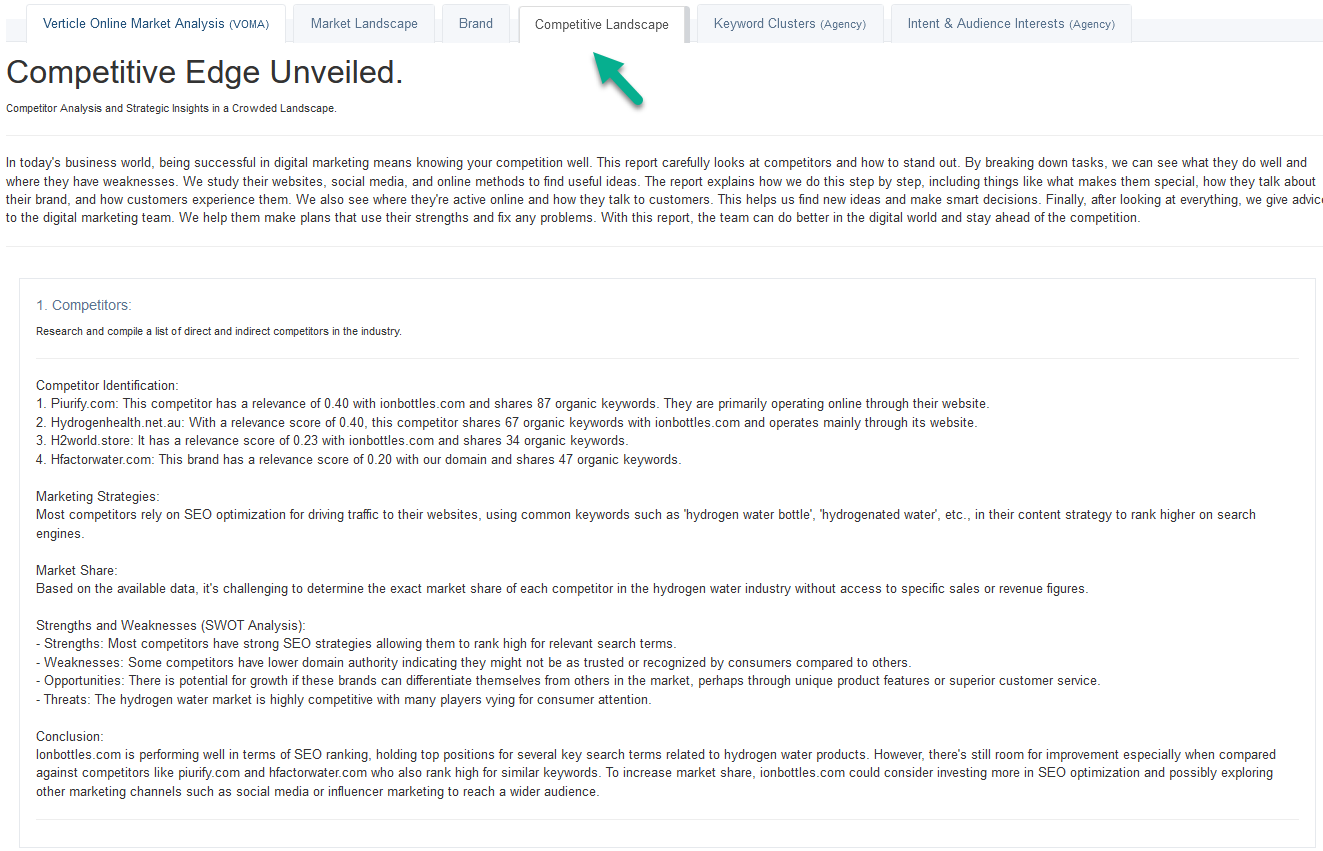
(V: 17:00 – 19:00) Chapter 3: Audience Analysis and Persona Development
Previous Chapter Recap:
In Chapter 2, we laid the foundation by defining business goals, establishing brand identity, and understanding the value proposition. We introduced the Digital Marketers Toolbox, highlighting its role in shaping your digital marketing strategies.
Educate:
Audience Analysis and Persona Development are critical for tailoring your marketing efforts to meet the needs of your target market. Using Vertical Online Market Analysis (VOMA), you can gain deep insights into your audience’s demographics, behaviour, and preferences, essential for creating compelling and personalized marketing messages.
Actionable Steps to Follow in the Digital Marketers Toolbox:
- Vertical Online Market Analysis (VOMA): Utilize VOMA in the Digital Marketers Toolbox to conduct an in-depth analysis of your market. This will help you identify key audience segments and their characteristics.
- Persona Development: Use the audience insights gained from VOMA to create detailed buyer personas. These personas should include demographic details, interests, pain points, and buying behavior.
Real-World Actionable Steps:
- Market Research: Conduct surveys, interviews, and focus groups to gather additional data about your target audience. This real-world feedback complements the insights from the Digital Marketers Toolbox.
- Persona Workshops: Organize workshops with your marketing and sales teams to refine the buyer personas. Ensure each persona is backed by data and aligns with your business objectives.
- Persona Application: Integrate these personas into your marketing campaigns. Tailor content, messages, and offers to match each persona’s specific needs and preferences if you have an existing website(s), or marketing campaigns.
(V: 19:00 – 23:00) Chapter 4: Competitor Bench-marking
Previous Chapter Recap:
In Chapter 3, we focused on Audience Analysis and Persona Development, using Vertical Online Market Analysis (VOMA) to gain insights into target markets and create detailed buyer personas. These insights help tailor marketing strategies to meet your audience’s specific needs and preferences.
Educate:
Competitor benchmarking is a critical digital marketing process involving identifying and analyzing your competitors to understand their strategies, strengths, and weaknesses. By analyzing competitors, you can uncover opportunities for differentiation and improvement in your digital marketing strategy.
Actionable Steps to Follow in the Digital Marketers Toolbox:
- Identifying Competitors: Utilize the Digital Marketers Toolbox to identify your main competitors by analyzing domain reports and market analysis tabs.
- Market Analysis > Competitor Tab: Dive into the competitor tab within the market analysis to get a detailed view of your competitors’ market positions, strengths, and weaknesses.
- Keyword Research > Top 10 Competitors: For specific keywords, use the keyword research tool to identify the top 10 competitors ranking for those terms. This provides insights into who you compete against in the SERPs for crucial keywords.
Real-World Actionable Steps:
- Competitive Analysis Document: Create a comprehensive document that lists your key competitors, their unique selling propositions, marketing strategies, content approaches, and any gaps or opportunities for improvement.
- SWOT Analysis: Conduct a SWOT analysis for each major competitor to identify their Strengths, Weaknesses, Opportunities, and Threats relative to your business.
- Monitoring Competitor Activity: Set up Google Alerts and use social listening tools to keep track of your competitors’ online activities, product launches, and customer feedback.
(V: 23:00 – 30:00) Chapter 5: Channel Selection and Tactics
Previous Chapter Recap:
Chapter 4 delved into Competitor Bench-marking, utilizing the Digital Marketers Toolbox to identify competitors and analyze their strategies. We learned how to explore domain reports, competitor tabs, and keyword research to understand the competitive landscape and uncover opportunities.
Educate:
Channel Selection and Tactics focus on understanding the vast array of digital marketing channels available and how to strategically select the ones that align with your business goals and audience preferences. It involves a thorough analysis of each channel’s strengths, audience reach, and compatibility with your marketing objectives.
Actionable Steps to Follow in the Digital Marketers Toolbox:
- Vertical Online Market Analysis (VOMA): Analyze the VOMA reports to understand the broader market trends and where your audience spends their time online.
- Market Landscape Tab: Utilize this feature to get a macro view of the digital ecosystem relevant to your business, identifying which channels are most effective in your industry.
- Brand Analysis: Analyze your brand’s presence across different channels within the Toolbox to gauge current engagement levels and opportunities for growth.
- Competitive Landscape: Explore the competitive landscape feature to see where your competitors are most active and successful, helping you decide which channels might be lucrative for you.
- Keyword Clusters (Agency): Use keyword clusters to understand your audience’s search intent and interests, informing your channel strategy based on where these queries are most prevalent.
- Intent & Audience Interests (Agency): Dive into audience interest data to tailor your channel selection to where your specific audience segments are most engaged.
Real-World Actionable Steps:
- Channel Evaluation: Assess each potential digital marketing channel (e.g., SEO, PPC, social media, email) to align with your audience’s preferences and business goals.
- Tactical Planning: For each selected channel, develop specific tactics. This might include content types for social media, keyword strategies for SEO, or targeting criteria for PPC.
- Integration and Alignment: Ensure your tactics across different channels are integrated and aligned to provide a cohesive brand experience.
- Performance Measurement: Set up KPIs for each channel and regularly review performance data to adjust tactics as needed for optimization.
(V: 30:00 – 35:00) Chapter 6: Keyword Research and Strategy
Previous Chapter Recap:
In Chapter 5, we explored Channel Selection and Tactics, focusing on understanding the digital marketing channels available and selecting the right mix to meet your goals. We covered how to use the Digital Marketers Toolbox for market analysis and channel evaluation and how to tailor strategies to your audience and business objectives.
Educate:
Keywords are the foundation of search engine optimization and digital marketing. They represent your audience’s queries to find information, products, and services online. A well-researched keyword strategy enables you to align your content with audience intent, improving visibility and engagement.
Actionable Steps to Follow in the Digital Marketers Toolbox:
- Keyword AI Assistant: Utilize the Keyword AI Assistant to explore keyword clusters, including informational, navigational, transactional, commercial, and service-based keywords. This tool helps identify the variety of queries related to your main topics.
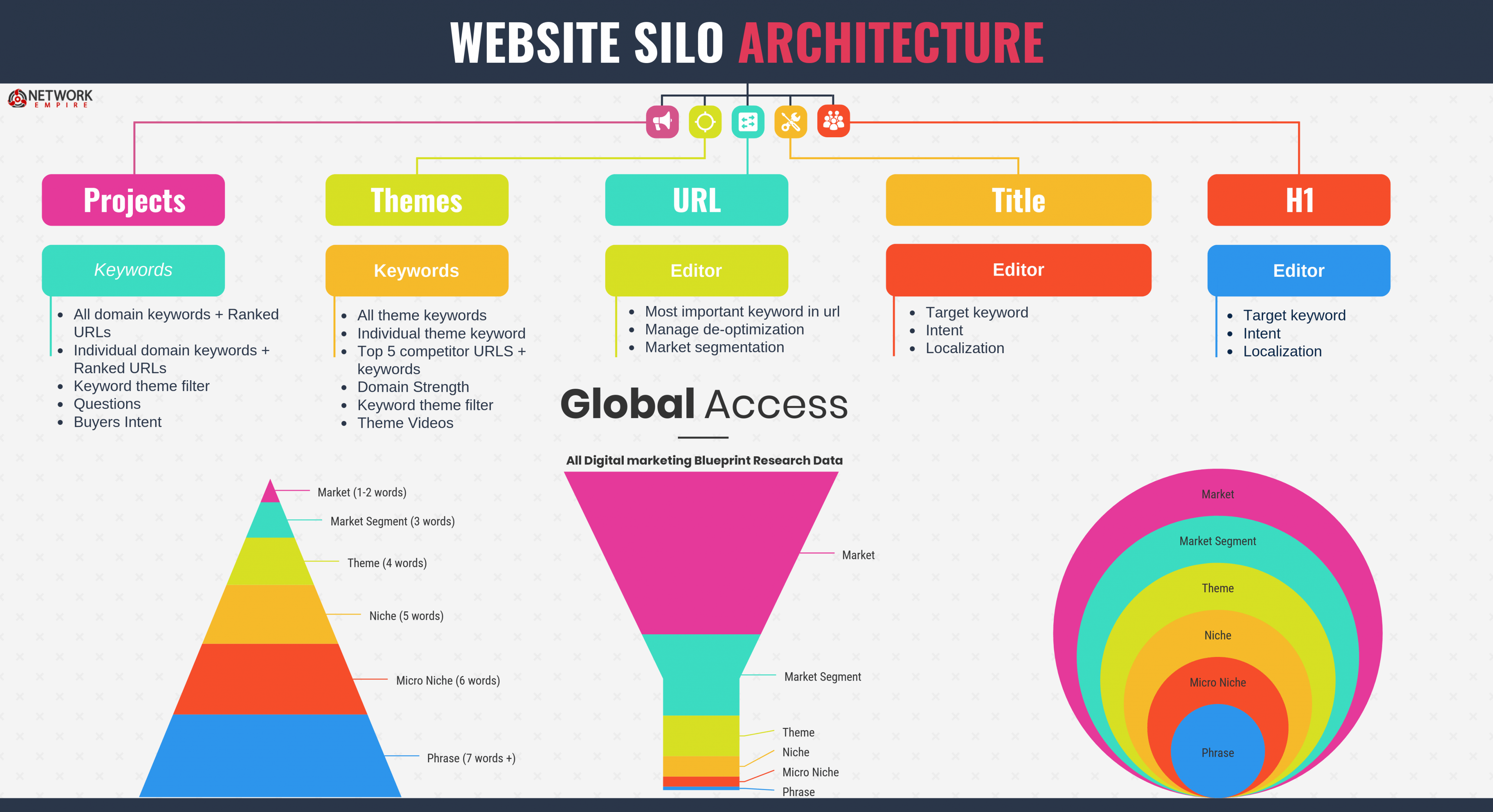
- Keyword Theme Research: Use the toolbox to extract the “Creamy Keywords” out of the trillions of keywords that float around the web. Remember the game is not about keywords but “things/entities”.
- Keyword Clusters Mapping: Use the Toolbox to map out keyword clusters, identifying questions, related terms, influencer keywords, and entities. This approach ensures comprehensive coverage of your topic and aligns with user search intent.
- Profitable Niches Discovery: Leverage the Toolbox’s data analysis features to identify profitable niches within your market. Look for high-volume, low-competition keywords that align with your products or services.
Real-World Actionable Steps:
- Market Research: Conduct market research to validate the demand and search volume of your identified keywords.
- Content Planning: Develop a content plan based on your keyword clusters, ensuring each piece of content addresses specific user intents and fits within your overall marketing strategy. Consider seasonal trends, Niches in the rank and rent niche reports.
- SEO Optimization: Optimize your website’s pages with the chosen keywords, focusing on title tags, meta descriptions, headers, and content to improve relevance and ranking potential.
- Performance Monitoring: Set up tracking for your target keywords to monitor rankings and adjust your strategy based on performance.
(V: 35:00 – 38:00) Chapter 7: Fundamentals of Website Silo Structure Design and Development
Previous Chapter Recap:
Chapter 6 explored Keyword Research and Strategy, highlighting the importance of understanding and utilizing keywords within the Digital Marketers Toolbox. We delved into advanced techniques for keyword research, including the use of keyword clusters and mapping profitable keywords to discover niche opportunities.
Educate:
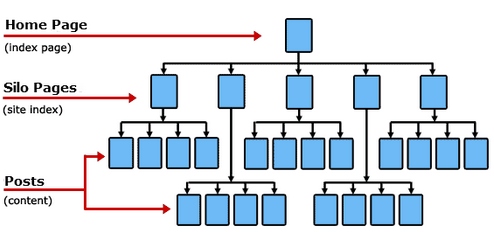
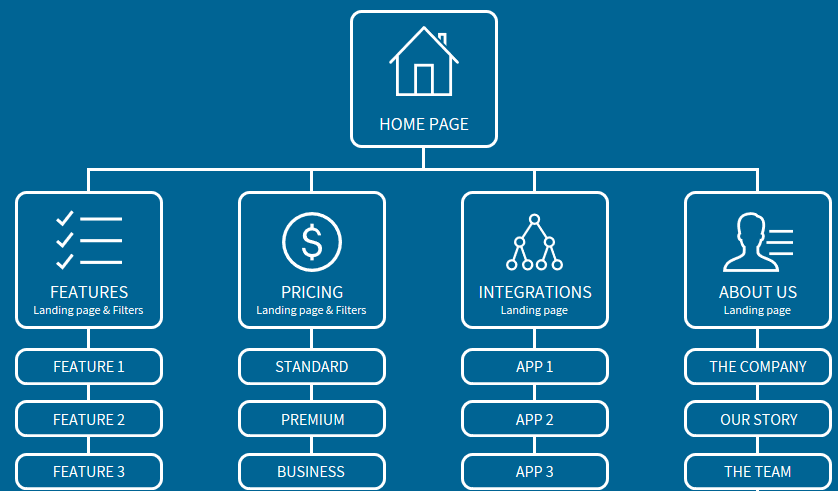
Website design and development fundamentals encompass more than aesthetic appeal; they are about creating a user-friendly, accessible, and effective online presence. A crucial aspect of this is understanding the Website Silo Structure, which organizes content into hierarchical, themed categories to improve both user experience (UX) and search engine optimization (SEO).
Actionable Steps to Follow in the Digital Marketers Toolbox:
- Silo Structure: Use Digital Marketers Toolbox to build your website’s structure and to identify new opportunities or for implementing or improving existing silo architecture.
- Content Organization: Utilize the Toolbox to organize content into clearly defined silos, ensuring each category has a distinct theme and is rich with relevant keywords.
- Internal Linking: Apply strategies within the Toolbox to create effective internal linking that supports your silo structure, enhancing navigation and SEO.
Real-World Actionable Steps:
- Website Audit: Conduct a comprehensive audit of your website to assess its current structure, usability, and SEO effectiveness.
- Silo Implementation: Based on the audit, reorganize your website’s content into a silo structure, focusing on hierarchical organization, thematically relevant grouping, and strategic internal linking.
- Technical Optimization: Ensure that your website’s URL structure, meta tags, and headers reflect the silo architecture, facilitating better indexing and user navigation. The WP Website Silo Builder plugin manages internal linking and navigational links for you.
- User Testing: Conduct user testing sessions to gather feedback on the website’s navigability and overall user experience, making adjustments as necessary.
- Bolt On Silo Method: To create an effective bolt-on website silo for SEO, begin with thorough keyword research to identify core themes. Structure your website like a book, with each silo representing a chapter focused on a specific theme. Develop high-quality, relevant content for each silo, ensuring it aligns with your chosen keywords. Implement strategic internal linking within silos to boost SEO, guiding users and search engines through your site’s hierarchy. This approach enhances site relevancy and user experience, contributing to improved search engine rankings. For more detailed guidance, please visit the original webpage. You use the WP Silo Builder plugin for WordPress to easily do
Website Silo Structure
(V: 38:00 – End of Video) Chapter 8: Content Strategy Framework
Previous Chapter Recap:
In Chapter 7, we explored the fundamentals of website design and development, focusing on the importance of user experience (UX) and the implementation of Website Silo Structure to enhance site navigation and SEO. We delved into the principles of silo architecture, emphasizing hierarchical organization, thematically relevant grouping, and strategic internal linking.
Educate:
Developing a Content Strategy Framework is essential for digital marketers aiming to drive engagement and conversions. Central to this is the concept of Topical Authority, which establishes your site as a trusted source of information within your niche. It’s about creating content that ranks well in search engines and genuinely serves your audience’s needs.
Actionable Steps to Follow in the Digital Marketers Toolbox:
- Topical Authority Analysis: Use the Toolbox to identify core themes and topics relevant to your niche and audience.
- Keyword and Content Planning: Leverage the Toolbox to conduct comprehensive keyword research, focusing on clusters of related terms that cover your topics in depth.
- Content Quality Assessment: Utilize the Toolbox’s features to ensure your content meets high-quality standards, focusing on originality, depth, readability, and usefulness.
Real-World Actionable Steps:
- Topic Identification: Start with identifying the main themes central to your brand and of interest to your target audience.
- Content Creation: Develop a diverse range of content, including blog posts, videos, infographics, and more, each addressing different aspects of your core topics and designed to cater to various user preferences.
- Quality and Depth Focus: Ensure each content piece comprehensively covers its topic, incorporating expert opinions, detailed explanations, and actionable insights.
- Continuous Update and Improvement: Regularly review and update your content to reflect the latest developments in your field, maintaining its relevance and authority.
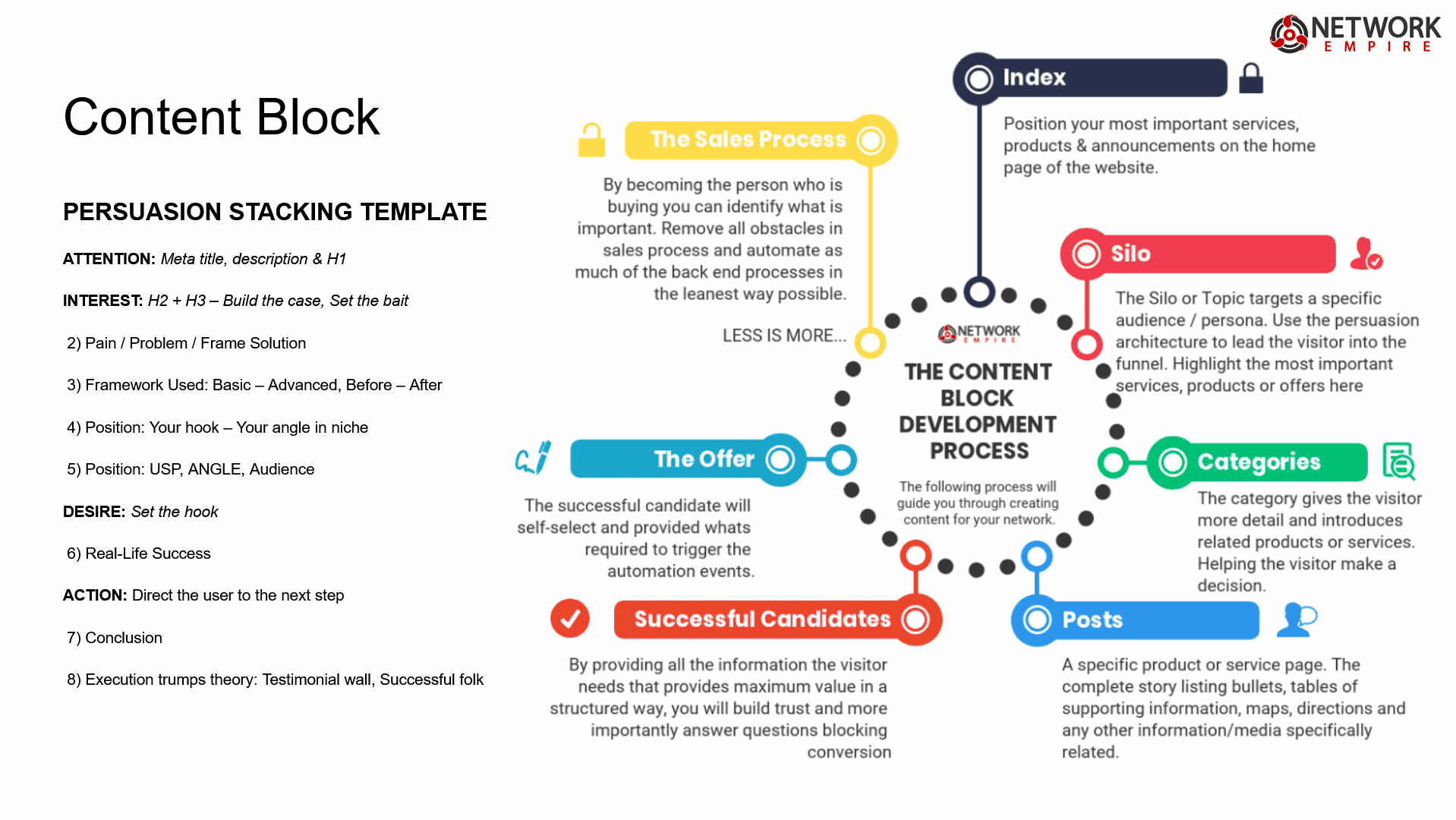
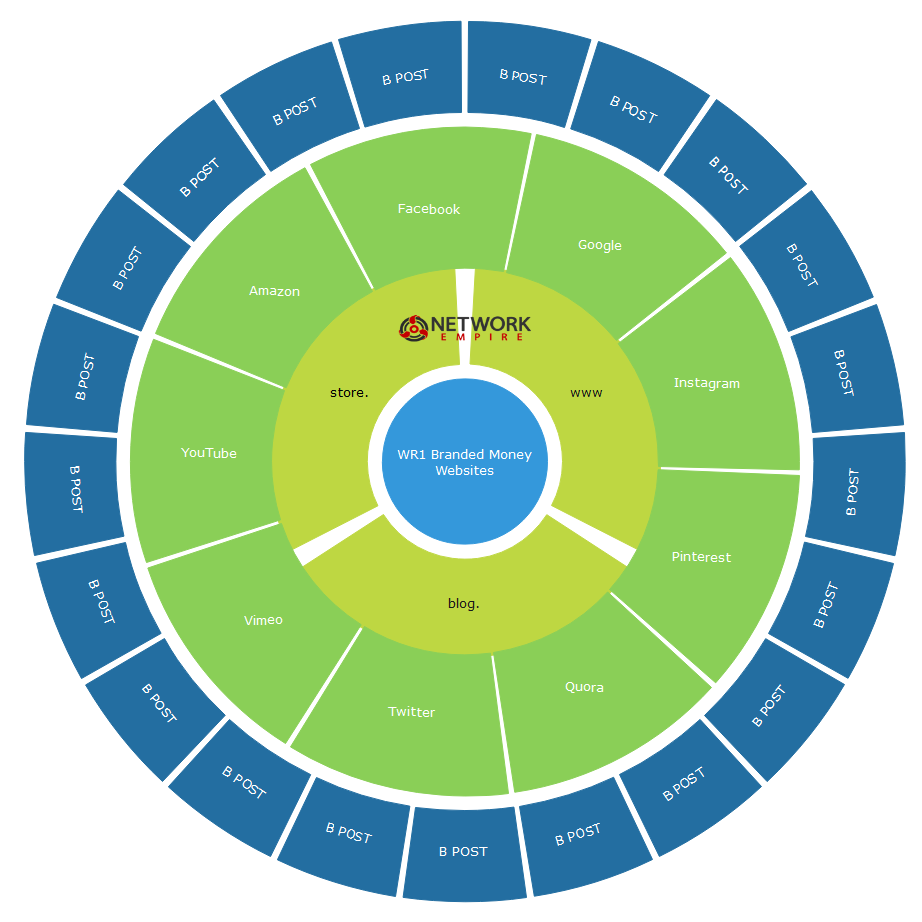
Digital Marketers Toolbox has the ability to map out your entire marketing network for you.
Chapter 9: Search Engine Optimization (SEO)
Previous Chapter Recap:
Chapter 8 delved into the Content Strategy Framework, emphasizing planning content for engagement and conversions, establishing Topical Authority, and aligning content with the buyer’s journey. We discussed the importance of quality and relevance in content creation across various formats like blogs, videos, and infographics.
Educate:
Search Engine Optimization (SEO) is divided into on-page and off-page SEO, each contributing uniquely to your website’s visibility and ranking. On-page SEO includes optimizing content quality, keywords, meta tags, URL structure, internal linking, site speed, and mobile-friendliness. Off-page SEO encompasses building backlinks, enhancing social signals, and fostering trustworthiness to bolster your site’s authority and reputation online.
Actionable Steps to Follow in the Digital Marketers Toolbox:
- Utilize the Toolbox to conduct comprehensive keyword research and identify opportunities for on-page optimization.
- Analyze your website’s current on-page SEO performance, speed, and mobile-friendliness using the Toolbox’s audit features.
- Leverage the Toolbox to build your backlink profile, by understanding the sources and quality of your inbound links to inform your off-page SEO strategy.
Real-World Actionable Steps:
- On-Page SEO Implementation: Regularly update your website’s content to ensure high quality and relevance. Optimize your meta tags and URLs for targeted keywords, and structure your site’s internal linking to enhance user navigation and SEO.
- Off-Page SEO Strategy: Develop a comprehensive backlink strategy that includes guest blogging, influencer partnerships, and high-quality directory submissions. Engage actively on social media platforms to boost your online presence and trustworthiness.
Chapter 10: Pay-Per-Click Advertising (PPC)
Previous Chapter Recap:
In Chapter 9, we explored the intricacies of Search Engine Optimization (SEO), covering on-page and off-page optimization strategies, including content optimization, meta tags, URL structures, backlinking strategies, domain authority, site speed, and mobile optimization. These foundational SEO practices set the stage for effective digital visibility and user engagement.
Educate:
Pay-per-click (PPC) advertising is a model where marketers pay a fee each time one of their ads is clicked. It’s a way of buying visits to your site rather than attempting to “earn” those visits organically, as with SEO. PPC allows for precise targeting, immediate results, and excellent tracking capabilities, making it a crucial component of digital marketing strategies.
Actionable Steps to Follow in the Digital Marketers Toolbox:
- Keyword Research for PPC: Use the Toolbox to conduct keyword research specifically for PPC campaigns, focusing on high-intent keywords likely to convert.
- Ad Copy Creation: Leverage the Toolbox’s features to craft compelling ad copy that resonates with your target audience and encourages clicks.
Real-World Actionable Steps:
- Setting Up PPC Campaigns: Create PPC campaigns on platforms like Google Ads and social media ads, define your target audience, set budgets, and choose the right keywords.
- Ad Creatives: Develop engaging and relevant ad creatives, including headlines, descriptions, that align with your campaign goals and audience interests.
- Landing Page Optimization: Ensure that the landing pages your ads link to are optimized for conversions, with clear calls-to-action (CTAs), compelling content, and fast loading times.
- Continuous Optimization: Regularly review your campaign metrics to identify areas for improvement and make data-driven decisions to optimize ad performance and budget allocation
Chapter 11: Social Media Marketing
Previous Chapter Recap:
Chapter 10 covered the essentials of Pay-Per-Click (PPC) Advertising, including how PPC works, crafting effective ad campaigns, and utilizing platforms like Google Ads and social media ads. We explored actionable steps within the Digital Marketers Toolbox for keyword research, ad copy creation, and alongside real-world strategies for setting up and optimizing PPC campaigns.
Educate:
Social Media Marketing involves creating content, engaging with your audience, and promoting your brand across social platforms like Facebook, Instagram, LinkedIn, etc. It’s about leveraging these platforms to build relationships, foster community, and drive traffic and conversions. A well-crafted social media strategy considers platform-specific nuances, audience demographics, and content types that resonate with your followers.
Actionable Steps to Follow in the Digital Marketers Toolbox:
- Audience Analysis: Utilize the Toolbox to gain insights into your audience’s preferences, behaviors, and demographics.
- Content Strategy Development: Use the Toolbox to plan and schedule diverse content types, ensuring alignment with your overall marketing objectives and audience interests.
- Performance Tracking: Leverage Googles analytics features to monitor engagement, reach, and conversions, enabling continuous optimization of your social media strategy.
Real-World Actionable Steps:
- Building a Social Media Calendar: Plan your content in advance, ensuring a consistent posting schedule that keeps your audience engaged and informed.
- Engagement Practices: Actively respond to comments, messages, and mentions to foster community and encourage user interaction.
- Platform-Specific Content Creation: Tailor your content to suit each social platform’s unique format and audience, utilizing visuals, hashtags, and trends to increase visibility and engagement.
- Influencer Collaborations: Partner with influencers to expand your reach and credibility among new audience segments.
Chapter 12: Email Marketing
Previous Chapter Recap:
In Chapter 11, we explored Social Media Marketing, focusing on developing a strategic approach for various platforms and engaging effectively with the audience to foster growth. We discussed building a coherent social media strategy, tailoring tactics for different platforms, and engaging content to cultivate a vibrant community.
Educate:
Email marketing remains a potent tool in digital communication, offering direct engagement with your audience. It’s about building and nurturing relationships by providing valuable content, updates, and offers that resonate with your subscribers. The key to successful email marketing lies in understanding your audience, segmenting your email list, crafting compelling content, and adhering to best practices and compliance regulations.
Actionable Steps to Follow in the Digital Marketers Toolbox:
- Building Your Email List: Utilize the Digital Marketers Toolbox to create trip wires for opt-in forms on your website and landing pages, capturing visitor emails effectively.
- Segmenting Your Audience: Employ the Toolbox to segment your email list based on demographics, behaviour, and interests, enabling targeted and relevant communication.
- Crafting Emails: Leverage the Toolbox’s Semantic AI Content Generator to write engaging, professional-looking emails that captivate your audience.
Real-World Actionable Steps:
- Defining Email Marketing Goals: Set clear objectives for your email campaigns, such as enhancing customer engagement, promoting sales, or nurturing leads.
- Content Development: Create a calendar for your email campaigns, ensuring a mix of educational content, product updates, and promotional offers.
- Personalization and Testing: Personalize email content to address recipients by name and conduct A/B testing on subject lines, call-to-actions (CTAs), and content to optimize engagement and conversions.
- Compliance: Ensure your email marketing practices comply with regulations such as GDPR and CAN-SPAM by including clear unsubscribe options and maintaining data privacy.
Chapter 13: Analytics and Measurement
Educate:
Analytics and Measurement are crucial for understanding the effectiveness of your digital marketing efforts. Setting up the right tools and metrics allows you to track your success, make informed decisions, and adjust your strategies based on data-driven insights. Key Performance Indicators (KPIs) such as traffic, conversion rates, and engagement metrics provide a comprehensive view of your performance across various digital marketing channels.
Actionable Steps to Follow in the Digital Marketers Toolbox:
- Tool Setup: Utilize analytics platforms like Google Analytics and Google Search Console, enabling you to track and analyze your website’s performance.
- KPI Dashboard: Monitor essential KPIs, including organic traffic, bounce rates, conversion rates, and CTRs, to gauge the effectiveness of your SEO and marketing campaigns.
- Performance Analysis: Leverage the analytics features to perform deep dives into your data, identifying trends, patterns, and areas for improvement.
Real-World Actionable Steps:
- Analytics Platform Integration: Ensure your website and marketing platforms are fully integrated with analytics tools like Google Analytics, enabling comprehensive tracking and Measurement.
- KPI Identification: Clearly define your KPIs based on your business goals and objectives, ensuring they are Specific, Measurable, Achievable, Relevant, and Time-bound (SMART).
- Regular Reporting: Establish a routine for generating and reviewing reports, providing insights into performance, trends, and opportunities for optimization.
- Data-Driven Decisions: Use the insights gathered from your analytics to inform strategic decisions, making adjustments to campaigns, content, and tactics based on what the data reveals.
Chapter 14: Blueprint Implementation and Management
Previous Chapter Recap:
Chapter 13 delved into Analytics and Measurement, focusing on the importance of setting up the right tools to track digital marketing success, understanding the key metrics and KPIs, and interpreting data to make informed decisions. This knowledge forms the basis for evaluating the effectiveness of your digital marketing strategies.
Educate:
Blueprint Implementation and Management is about bringing your digital marketing plan to life and ensuring it remains dynamic and responsive to the market and your business goals. This involves implementing your digital marketing blueprint framework, also implementing it across your digital platforms if they exist, and continuously managing and adjusting your strategies based on performance data and market changes.
Actionable Steps to Follow in the Digital Marketers Toolbox:
- Implementing Your Blueprint: Utilize the Digital Marketers Toolbox to export the parts from your comprehensive digital marketing blueprint. This might include your website’s structure, content plan, SEO strategies, and social media campaigns.
- Content and Media Management: Leverage the Toolbox to efficiently add and manage content and media on your website, ensuring that all elements align with your blueprint and SEO best practices.
- Social Media Promotion: Schedule content across your social media platforms, extending the reach of your digital marketing efforts.
Real-World Actionable Steps:
- Website and Content Setup: Following the blueprint, set up your website’s structure, including silo architecture, and populate it with high-quality content. Optimize all pages for SEO, focusing on title tags, meta descriptions, and keyword integration. The WP website silo builder plugin does the page creation in WordPress for you if you use the import XML blueprint function in plugin.
- Ongoing Content Creation: Establish a routine for creating and updating content, ensuring it remains relevant and engaging to your audience. Utilize feedback and performance data to guide content topics and formats.
- Continuous Strategy Adjustment: Regularly review your digital marketing performance across all channels. Use analytics to identify areas for improvement or optimization and adjust your strategies accordingly to maintain or enhance performance.
Conclusion: Digital Marketing Training Program for Beginners
Recap of the Digital Marketing Blueprint Process:
Throughout this training program, we’ve journeyed from the foundational principles of digital marketing to the intricate blueprint implementation and management processes. Now its your turn to build your first blueprint.